The bottleneck in AI-assisted development is no longer writing code. It is coordinating the work. HiveControl lets your AI plan, organize, and coordinate multiple workspaces while you stay in control of the outcome.
When AI coding assistants first arrived, they changed how developers built software. Writing code, fixing bugs, and exploring solutions became much faster. But as we started using these tools on larger projects, we noticed the same challenge repeatedly appearing. The AI was not struggling to write code. We were struggling to organize the work.
Building a feature has always required more than changing a few files. A single feature can involve backend services, frontend components, shared libraries, tests, documentation, and reviews. AI can help with each individual piece, but someone still has to decide how the work should be split, create the right environments, keep everything moving, and connect the results back together. Even with AI, the developer becomes the person managing the process. HiveControl changes that.
Give DevSwarm the Goal. Let It Figure Out the Rest.
As AI becomes better at understanding what you want to build, it should also become better at deciding how to approach the work. Developers should not need to manually split large tasks into multiple workspaces, launch separate agents, and keep different conversations synchronized just because a project is complex.
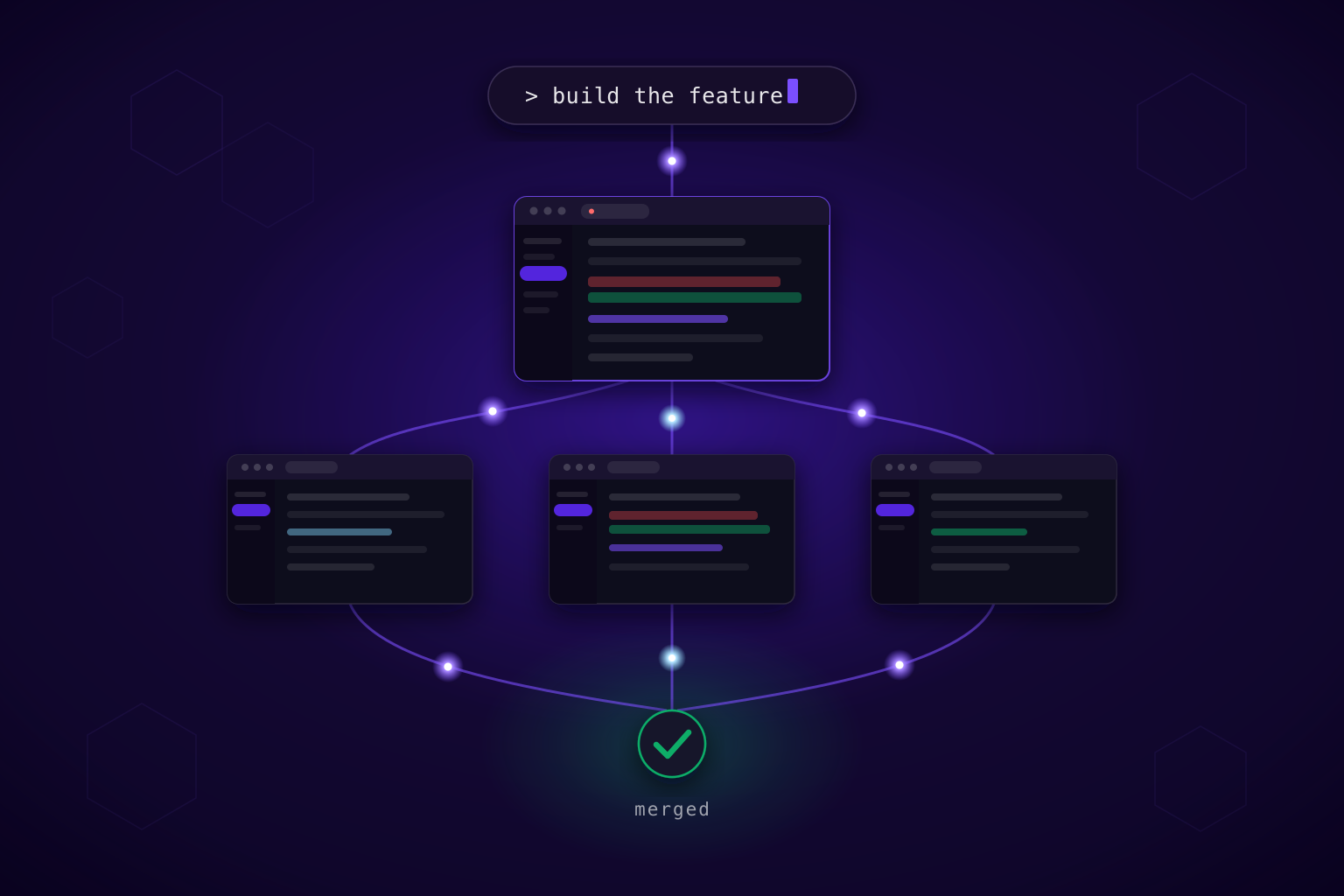
With HiveControl, you start with the goal. You describe the outcome in plain language, the same way you would explain a task to another engineer. "Plan this feature and build it across parallel workspaces." "Review my sprint and create workspaces for the remaining tasks." "Open every pull request that needs review in its own workspace."
From there, DevSwarm handles the coordination. It creates the workspaces it needs, assigns work across them, and keeps the different pieces connected as they progress. You focus on what needs to be built, while the AI manages the path to get there.
Coordinating Work Without Managing Every Step
Running multiple tasks in parallel is not a new idea. Engineering teams have done it with branches, services, and separate environments for years. The difficult part has always been coordination.
When work is split across multiple places, someone needs to keep track of what has changed, what still needs to happen, and how each piece connects to the bigger goal. With AI, that problem becomes even more important because the system is now capable of doing more work independently. HiveControl provides that coordination layer.
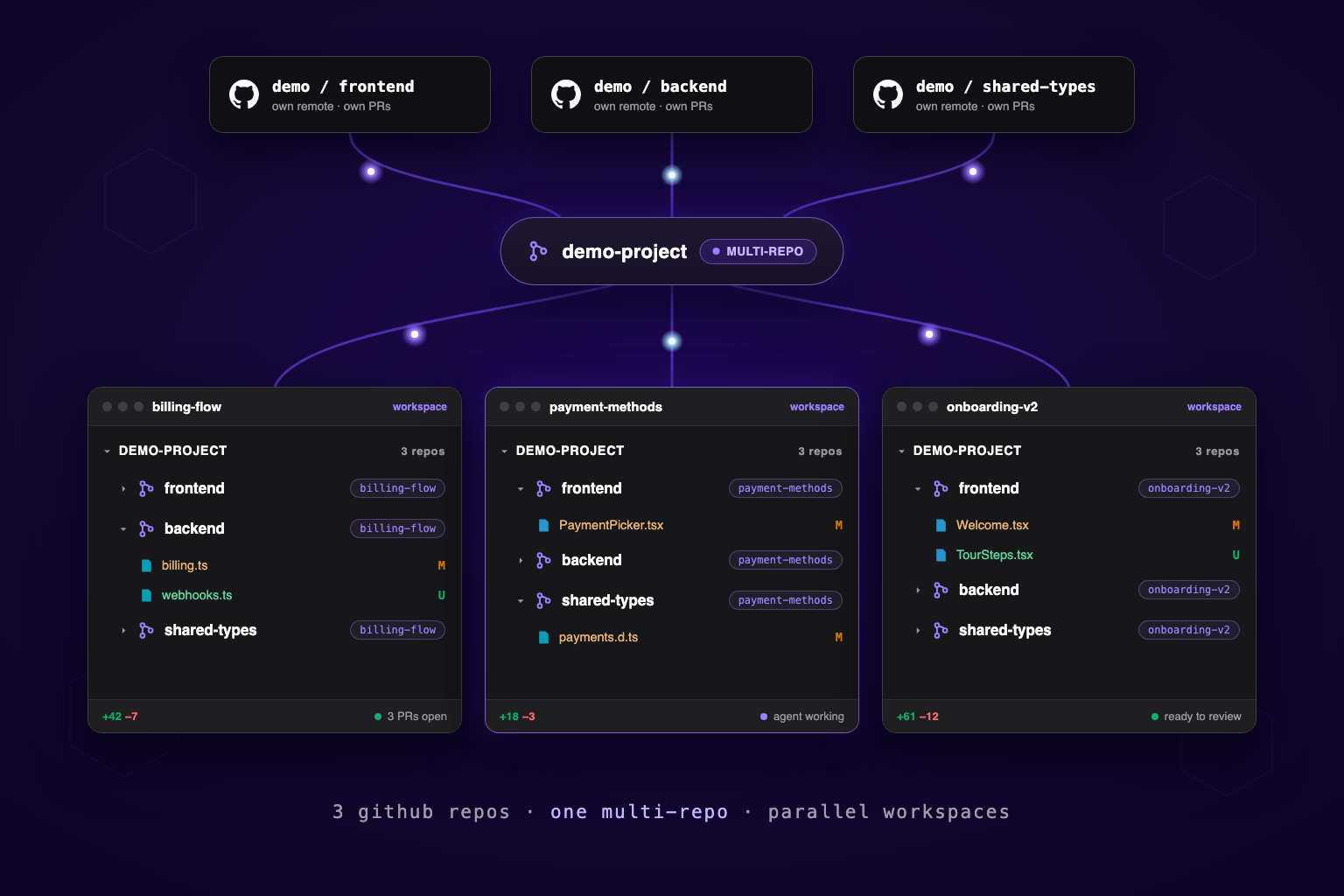
Workspaces communicate through a shared orchestration tree. A parent workspace can create child workspaces, provide direction, receive updates, and adjust the plan as the work progresses. Instead of manually copying context between different AI conversations or keeping every detail in your head, the workspaces exchange the information they need.
This also changes how context is managed. Rather than forcing one conversation to understand an entire project, HiveControl distributes work across focused workspaces. Each workspace carries the context needed for its own responsibility while the parent workspace maintains the larger picture. The system scales through organization, not by making one conversation endlessly larger.
Stay Connected to the Work
Giving AI more responsibility does not mean hiding what it is doing. Every workspace created by HiveControl is a real DevSwarm workspace. You can open any node and see the files, terminal, Git history, changes, and reasoning behind the work. Nothing is hidden behind a summary or an invisible background process. You can inspect progress, provide additional direction, or take over a workspace whenever needed.
For example, you can ask DevSwarm to review your open pull requests and create a workspace for each one. Instead of manually checking out branches and switching between environments, each review happens in its own workspace where you can inspect the changes and work alongside the AI. HiveControl automates coordination, but the developer stays involved in the decisions that matter.
Common Orchestration Patterns
As teams use HiveControl for larger engineering tasks, certain workflows naturally emerge. One pattern separates planning from implementation. A workspace focuses on understanding the problem and creating an execution plan, while other workspaces handle development. This is the Plan-Do Pattern. Another pattern helps with large reviews by organizing changes into smaller, focused pull requests that are easier to understand. This is the Review Stack Pattern.
A third pattern organizes the releases themselves. Instead of letting a release grow into one large merge at the end, you cut a stack of future release branches ahead of time and assign each feature to the release it will ship in. Every release stays small, and once a release ships, the work flows down the stack to the releases below it with no back-merges. This is the Release Stack Pattern, and it keeps QA, acceptance, and deployment manageable even as AI pushes development velocity up.
These are not required workflows. They are examples of how teams can use HiveControl when a project becomes too large for a single workspace or conversation. The HiveControl docs walk through how each pattern runs.
For a full example, watch one developer run an entire sprint with these patterns: AI plans the work, spins up the parallel workspaces, coordinates them, and assembles the review chain.
Building Toward AI-Native Development
The first generation of AI development tools helped developers write code faster. The next challenge is helping developers coordinate larger amounts of work.
As AI becomes capable of handling increasingly complex tasks, developers need systems that can take on more responsibility while still keeping humans connected to the process. HiveControl is our approach to that problem: giving AI the ability to organize work while giving developers the visibility and control they need.
Update to DevSwarm 2.3.2 or later, give DevSwarm a goal, and see how HiveControl helps coordinate the work behind it.